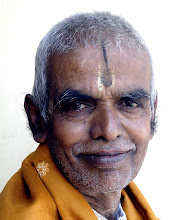
This is a column on the happennings in Karnataka, with particular reference to current affairs bringing to bear more than four decade old experience in covering the current affairs in Karnataka.

Sunday, November 28, 2010

Avoidable controversy

HUBLI, 28TH Nov. 2010

Poor Yeddyurappa. He is a victim of his own habits. He is impulsive in his reactions, a habit which he has carried from his days as the state unit and Leader of the BJP opposition in the Karnataka Assembly. He often puts his foot into his mouth.

He has a penchant for giving promise, with no thought whatsoever of redeeming them. He is liberal with both.

These have often dragged him into veritable quagmire of controversies needlessly.

The latest one to surface has been the one in which he has pitted himself with Karnataka Lokayukta, Mr. Justice Santosh Hegde, over the propriety of the state government constituting a judicial commission to go into land denotification issue, when the matter is pending with Lokayukta..

From all points of view, this was an avoidable controversy. Only sometime ago, Mr. Yeddyurappa had brokered peace when Mr. Hegde put in his papers dissatisfied as he was with the manner in which the State Government was hedging the demand for the grant of the suomotto powers of investigation into the cases of corruption. (Under the present rules, the Lokayukta can only act on the basis of the written complaint and in the absence of the same; he can’t proceed in the matter and it for the removal of this impediment, that he has been demanding the grant of suo motto power).

In view of the public outcry over the episode, Mr. Yeddyurappa had to seek the intervention of the BJPs higher-ups including the patriarch Mr. L K Advani in making Mr. Hegde relent. Mr. Hegde was promised that the needful action would be taken to meet his demand. But this has hardly materialized in the days that followed. What has happened is that the government has met the demand halfway only leaving the main question unresolved.

From all points of view, this was an avoidable controversy. It does not stand to reason, why the Karnataka Chief Minister should open another front for fight, when he had won a reprieve by a whisker as it were from the party high command which wanted to give him the marching orders. It has opened the raw wound of uneasy relations between the state government and the Lokayukta, at a time, when the issue had almost gone out of the memory of the people.

One may concede that the decision to go in for judicial commission was the impulsive reaction from Mr. Yeddyurappa, when in the light of the raining of the land denotification scandal involving his own kith and kin, had prompted the high command to think in terms of asking him to quit. But the subsequent events have proved that it is a deliberate action. In an unusual reaction, the state government seeks the status report from the Lokayukta on all the matters entrusted to it for enquiry, while the state government is known to be sitting over the reports already sent by Lokayukta, thus coming in the way of the enquiry reaching the logical end. Not only those, the BJP legislators are let lose on the Lokayukta, with one of them demanding the apology from the Lokayukta to the Chief Minister and threaten to organize a demonstration in front of the office of the Lokayukta. The action smacks of attitude of the political vengeance, which is uncalled for since, the Lokayukta is not a political office, Mr. Santosh Hegde is not a person, who has any political ambition to be fulfilled.

It is not clear what Mr. Yeddyurappa wants to achieve by this kind of action? One plausible explanation could be that he would like to complicate the matter by having parallel enquiry by two separate agencies, and create a legal conundrum to delay the process of enquiry one way or other.

Mr. Yeddyurappa in his wisdom genuinely believed that the judicial enquiry would serve the ends more than the one conducted by the Lokayukta, nothing prevented him from having informal consultation to avoid any acrimony or needless controversy.

That Mr. Hegde, the Lokayukta has been hurt very much by diatribe opened by the government is evident from his strong reaction. Mr. Hegde, who is otherwise quite restrained and balanced in his remarks, made an emotional remark that if the government so desired, it could abolish the Lokayukta by repealing the law.

Mr. Yeddyurappa and his cohorts should understand that Lokayukta today enjoys better credibility than the BJP government and this is the one controversy they could have avoided on the eve of electoral challenge ahead in the form of the panchayat elections next month. The inimical attitude towards the Lokayukta inherent in the state government’s action and observations cannot be hidden by any explanation made on behalf of the government. More over there is hardly anything that government gains politically by throwing innuendos against the style of the working of Lokayukta.

Friday, November 26, 2010

Understanding Bendre

HUBLI, November 27:

“Rasave Janana,/

Virasa Marana/

Samarasave Jeevana”

These lilting lines, spreading the message harmony in a world torn asunder by the discords, dissensions, greed and avarice, penned by Kannada’s poet laureate Da. Ra. Bendre, a literary colossus who strode majestically on the firmament of modern Kannada literature for more than seven decades, continue to be on the lips of every Kannada speaking person even today.

Even thirty years after his demise, same liveliness and contemporary relevance, and this has been embellished by the assiduous efforts underway to analyse and interpret his writings for the benefit of the posterity.

“Bendre is an evergreen poet,” says the poet, Chennaveera Kanavi. “I don’t mind admitting that every time I read his poems, I acquire newer insights. The process of learning never stops”

Better known by his pen name, Ambikatanaya Datta, the poet, a recipient of the prestigious Jnanapitha awardee, was a poet par excellence of a different genre. Poetry was his first love, and was quite at home with other forms of literature like the dramas, prose, satire, and short stories.

Poem for him was a mere translation of his pangs and pains. He would often say that the poet in him speaks and he was a mere scribe. “Enna Paadu enagirali / Nanna Haadannashte koduve, Rasika” (Let my sufferings remain with me /But I would give you song Oh Rasika), he would often say. .

What made his poetries sparkle and appealing to the common man, were that they were rooted in desi Kannada of the Dharwad region, and were extremely lyrical too and was liberal in using the colloquial idioms. He was a magician par excellence with words and his capacity to create imageries was something superb.

Besides being a multifaceted literary personality, Bendre was a visionary, a philosopher and scientific thinker and was far ahead of time. He had eternal hopes in the dawn of a world of peace, without hatred and bereft of poverty and hunger. “Let not the cry of unborn babe is heard anywhere in the world “he would say.

Another facet of his personality came to light during the last phase of life. Bendre had developed a fascination for the study of numbers and had evolved number of theories. He would often give his blessings in numbers.

Just he passed away on the day of the festival of lights way back in 1981 at the far away Mumbai hospital, the hospital staff asked for a message from the poet. His response was “881 and 441”, which represented as he himself made it clear “Hridaya and Viveka”. These were essential for the emergency of a health world, he said. As back as in forties, Bendre had said in his presidential address at the Kannada Sahitya Sammelana in Shimoga, that the fusion of material science and literature were the essential tool in quest of truth. He would often say that mere literature alone would not help realize the truth but it has to be tempered with material science.

For those, who were unaware of the thought process of the Bendre, which was an amalgam of philosophical thoughts, couched in scientific theories, mathematical combination, found it difficult to fathom the hidden meaning of his poetries.

And Bendre was aware of that. Dharwad takkadi innoo tookaane aagilla. Horataava chakadi, hortaava chakadi…,” was his favorite observation about his works not being properly assessed or understood by the society. He had alluded himself to the Dharwad Scale “Takkadi”, which is waiting to be weighed. (Takkadi tooka, is typical desi expression, which is used in the rural areas especially in the rural market for pricing the produce brought) .The scale of evaluation of his poetry was to emerge, while cartloads of literature continued to be produced. (

And the situation remained so when his end came in 1981. He had left behind a rich legacy of literature, in the form published works, manuscripts waiting to see the light of the day, the plethora of notes and jottings he had made on practically each page of the more 16,000 books in his personal library. All this was waiting to be deciphered and interpreted and brought out.

This arduous task, stupendous by any standards has been bravely taken up by a two member team comprising of Dr Vaman Bendre, the son and Dr K S Sharma, his close disciple, both of whom by their close association with the poet, have a keen insight into the thinking, the philosophical strands and the language used by the poet.

For them it has been a more labor of love and a sure way of keeping Bendres memory alive for the posterity. Combining themselves in the name of the Bendre Research Institute Hubli , the two member duo, have ploughed a lonely furrow and put in indefatigable efforts to bring out more than 25,000 pages of literature in the post Bendre era.. It includes;

· Six volumes comprising of entire gamut of poems written by Bendre in his sojourn lasting more than seven decades. It is not a mere mechanical collection of whatever has been published. But it is thematically arranged, with apt commentaries and graphic illustration and presented in an epic form, since the poet always used to say that his life was nothing but an epic.

· Two volumes on Mother and Aurobindo and Sakhi geete a song of life partner described mini epic.

· Three volumes on dramas

· Kavyodya a prose volume on aesthetics, its philosophy in his poems.

· Besides the Research Institute has brought out 35 individual anthology of collection of poems, five selections , 14 stage plays independently and Taledanda relating to Basaveshwara and another a book transcreated by Bendre from the work of Sanskrit write Bhasa based an episode in Ramayana ; 13 selection of Bendre poems, with musical notations, in a bid to introduce a new concept of Bendre Sangeet on the pattern of Tagore Sangeet and translation of Kahlil Gibrans “Good Earth” and writing son Bendre by contemporary writers.

And the latest to come out to the stables of the Bendre Research Institute have been the 13th volume in the series of the collected works of Bendre, namely, Sahitya Yoga Sidhanta, a treatise on aesthetics in Bendre prose, and Bendre Samagra Kaavya Nighantu, a dictionary of the words used by the poet, compiled by the leading linguist, Dr B B Rajpurohit, who incidentally had collaborated with Dr Nichida of Japaan in bringing out Kannada English Japanese dictionary.

The Sahitya Yoga Siddhanta , the second prose volume brought out mainly deals with the aesthetics in prose and comprise of five parts – namely a) Theory of literary prose; b) Samvada – translation of his marathi articles; c) short stories, which Bendre would often describe as common mans epics including Transcreation of Chinese stories and adapted to Indian settings ; d) Kadambari yoga, with Bendre writing the finale of relay writing of the novel by eleven authors, in an unique literary experiment undertaken by Manohar Grantha Mala, and e) ten satires

The significance of the 170 page lexicon lies in the fact that it deals with only the words which are not found in other dictionaries and the emphasis is on the colloquial Kannada used by the poet, which are peculiar to this part of Karnataka, which are hardly understood by the other regional colloquial Kannada spoken spoken elsewhere in the state and also on the words which have more than one meanings.

Oh Manava, Bidu Durabihmanava/ Oh Daanava kodu Hridaya Daanavaa,” which could be loosely translated as, “Oh man, shun the ego/ Oh demon, donate your heart.” This is a typical example of diglosia found in the work of Bendre. Both the words Maanava and Daanava have different meanings in the two contexts

These books were released to mark the 30th annual memorial day of the poet the other day during the just concluded Deepavali festival Mr. Chennavira Kanavi, the leading poet expressed the view that by using the Dharwad desi Kannada, Bendre had raised his literature to cosmic heights In a way Bendre could be placed a notch above the English poet, W B Yeats, who while being Irish, gave up the desi to start writing in English.

Dr K Raghavendra Rao, who has translated several of works of Bendre including the Jnanapith award winning work “Naku Tanti” in English, said that “Bendre who had transcended the barriers of language deserves to be treated on par with Shakespere and Yeats. No lexicon can fully help understand Bendre.

“We cannot afford to rest on our laurels and we still have a long long way to go” say modestly, Dr Vaman Bendre and Dr K Sharma and add many other publications about Bendre are in the pipeline.

Eom

High Command with no command

Mathihalli Madan Mohan

Senior Journalist and Columnist

Hubli 580032

(Mobile 94480-74872)

HUBLI, Nov. 27, 2010

The Yeddyuarppa episode has brought into sharp focus the phenomenon of diminishing authority of the BJP High Command in the recent years, especially after the party’s abortive efforts to recapture power at the Centre.

Any strong Chief Minister can dare the party high command and get away with it. The Gujarat Chief Minister Mr. Narendra Modi had done it in the past. Now it has been the turn of the Karnataka Chief Minister to follow suit.

Unable to handle a defiant Karnataka Chief Minister, the BJP leadership led by the younger generation leader Mr. Nitish Gadkari pocketed its pride in resoling from its earlier demand that Mr. Yeddyurappa quit and acquiesced to his continuation in office meekly. The impression that it is a temporary reprieve that Mr. Yeddyurappa got till the all important and locally important panchayat elections slated next month would be held was punctured by Mr. Yeddyurappa, who on his triumphant return to Bangalore declared that he was there for the full term. The apologetic words by the party high command justifying its volte-face in the matter were too feeble to mislead anybody.

In doing so, the BJP leadership opted for practical politics rather than meandering on the ideological plane, at least for public consumption. For the BJP what appeared to be more important at the moment, was not to jeopardize the continuance of the only saffron government south of Vindhyas rather than worry over the prospects of Mr. Advani being projected as the future Prime Minister, in the event of early elections to parliament as a consequence of the continued stalemate on the question of constituting the JPC to probe into the 2G spectrum affair.

On his part, Mr. Yeddyurappa played his cards carefully as per a well scripted plan to fight what at one time appeared to be his last ditch battle for survival. Firstly, he had prepared a long dossier on the sins of omission and commission committed by his predecessors in office, especially on the question of identification of land, which has become a hot potato at the moment; took a public stand that he had done nothing wrong, while announcing his decision to order a judicial probe into the denotification issue with a view to taking the sting out of the opposition attacks. He had also gone public in finding nothing wrong his sons getting the land.

Secondly, he took steps to mobilise the support of select religious leaders who mostly belonged to his own community lingayats to publicly plead against the change in a bid to impress that his community, which is a major community in Karnataka was backing him and would not tolerate any change. He had also herded a group of ministers and MPs to New Delhi to put pressure on the central leadership.

Thirdly and more importantly, he had also made out the case questioning the propriety of the High Command in singling him out for such a treatment, while condoning the indiscretions of others in the party. His ire particularly was on two persons, namely the General Secretary of the party, Mr. Ananth Kumar, his one time comrade in arms turned known political adversary within the party, whom however, he did not name. and on the activities of the Reddy brothers who have been openly needling him and went to extent of publicly campaigning for his ouster, obviously with the support and patronage of some Central leaders. Inherent in the criticism was the link the Reddys had with Mrs. Sushma Swaraj the Leader of the Opposition in the loksabha.

The ace up in his sleeves however was the “TINA” factor (There Is No Alternative) projection that he had made about the inevitability of his continuance in office. For all purposes, Mr. Yeddyurappa is the tallest of the party leaders in Karnataka. And none mentioned as his possible successors, including the party’s state president Mr. Eswarappa, Panchayat Raj Minister, Mr. Jagadish Shettar, Mr Sadanand Gowda, the party MP and former state chief, have the kind of the image that Mr. Yeddyurappa has built up around him and among the people. Nobody in the party has the gift of gab or gumption and oratorical skills that he has. Besides he has been only one who has toured the length and breadth of the state and has been able to build up a kind of rapport.

His political stature is not necessarily confined to BJP. It is so among all the political parties in Karnataka in general and in Congress in particular. Mr. Devegowda is the only exception. But the ageing Gowda, a former Prime Minister, is leaning more towards retirement than being politically active like Mr Yeddyurappa.

. Even his enemies have to admit ungrudgingly that Mr. Yeddyurappa had built the party brick by brick and shares a major share of the credit. The BJP has been a beneficiary of the rising anti Congress mood in the state and he has cleverly utilised.

Besides, the forthcoming elections to the grass root level democratic institutions of taluk and zilla panchayats is an avenue for testing the political waters in the rural areas. Going by the track record of panchayat elections, the verdict always goes in favour of the party in power. The Janata Dal had won when it was in power and so was the Congress when in office. The BJP is in power at the moment in Karnataka and decks are stacked in its favour. Any change of leadership at this stage may not augur well for the party’s plans to build units grass root level support.

Mr. Yeddyurappa is a stubborn and a 24 x 7 political animal like Mr. Devegowda and and is an indefatigable worker. He has some weaknesses too including the “sun stroke”, which is an occupational disease which normally affects the persons in power. He believes in ploughing lonely furrow and hardly a team man. Going by the allegations of corruption flying all around, which of course are yet to be verified, even as Mr. Yeddyurappa is pleading innocence, he and his family members appear be the victims of the money guzzling syndrome.

He is prone to get into trouble quite often and he has managed to come out of it from them, the present one being the latest one.

It is clear that Mr. Yeddyurappa dared the high command and made them relent and the explanation given by the high command reads like a pathetic story of capitulation against the regional satraps, who are going strong. The Bihar results have again proved that the regionalism is rising its head and the days of the strong regional leaders controlling the strings of power at the Centre as it used to be happen in the olden days are all set to return.

Can Mr. Yeddyurappa be wise by the reprieve he has got and put all his energy in building up the state, which has paid a heavy price for the political instability, which has been stalking Karnataka since 2004, instead of depending on the luck all the time to get out of the trouble. Only time will be able to tell.

Eom 10.00 hrs. 27.11.10.

Monday, March 27, 2006

PRIs in a for a bad time

Panchayat institutions in Karnataka are in for bad time in Karnataka.
HUBLI, March 27, 2006
Fears about the future of the panchayat raj institutions (PRIs) in Karnataka, which were poised to open a new chapter of the financial and functional autonomy, are come true much earlier than expected under the new Karnataka Development Front regime.
The fears had been prompted by the fact that both the alliance partners of the new combination which is in office in Karnataka are alien to the concept of the empowerment of the PRIs. For the BJP, which is a dominant partner by number, it is known that the party has scant respect for the system and that the inclusion of the profession of commitment to the concept in its manifesto was only an eye wash. And the junior partner, the breakaway group of the JDS has absolutely no hang of the same, since it is ideologically barren as the things stand today
There was a flickering hope that the BJP, could do something and carry forward the programmes, which had been launched by the predecessor government, because the BJP had made a reference to the system in its manifesto. But the hopes were belied with the new Minister for Rural Development and Panchayat Raj Mr. C M Dais, making observations which are contrary to the spirit of the changes made and philosophy followed.
He made it clear on the floor of the assembly that the legislators would continue to head the task force to oversee the implementation of the rural water schemes. This comes as a total variance to the changes made through the amendment to the Karnataka Panchayat Act , under which the gram panchayats get the exclusive jurisdiction over the implementation of the rural water scheme.
The then Minister for Panchayat Raj under the Dharam Singh government refused to oblige the members when a similar demand was then made by saying that he would not like to go against the law passed. “You change the law and we can implement the new proposal”. This was the firm stand he took and he stood the ground despite the mounting pressure on him including by the then Chief Minister too.
However as a sop to the agitated legislators, the government condescended to constitute the task force under the legislators only to supervise “emergency” schemes for a period of three months till the summer season was over. Dr Mahadevappa by that time had been dropped from the Ministry as a fall out of the spat between Devegowda and Siddaramaiah. Had Mahadevappa continued he would have certainly put his foot down firmly.
But what could not be done then, has now been done by the present regime. Mr. Udasi is not stopping at that. He knows that the law as has been amended does not permit it. He has been toying with the idea of amending the law to restore the primacy of the legislators in the implementation of the rural development schemes.
This is likely to be done after the current assembly session, according to the information available. At the moment, there is discussion within the government as to whether the reamendment of the law would pass muster, in view of the 73rd and 74th Constitutional amendments made which have endowed powers to the rural and urban local self government system. But the thinking has been that Mr. Udashi will have his way, despite the legal battle the government may have to certainly fight in the coming days. And the passage will be smoother than expected not only because of the game of numbers which favour the ruling combination but because the Congress members are not averse to changes their own government had brought.
It may be mentioned here that the Karnataka Panchayatraj Act was amended ten years after it was enacted during year 2003 by the Krishna government, which however dragged its own feet to give effect to the same. And it was done by the Dharam Singh government when the Assurance Committee of the Karnataka Legislative Assembly headed by Mr. D R Patil, took up the issue of the government redeeming its promise. As a result a government order was made in August 2004 and around 170 schemes were transferred from the state sector to the district sector to enable the PRIs to implement the same. This arrangement was formalised through the budget allocation made by Mr. Siddaramaiah in his budget estimates for the year 2005-2006 and the same has been continued in the budget for the present financial year presented by Mr. B S Yediyurappa.
The path of the democratic decentralization in Karnataka has been riddled with obstacles of sorts since the beginning. The concept of the transfer of powers to the PRIs has not been kindly taken by legislators, who fell that they are marginalisd and also by bureaucracy, which has never liked the concept accountability that the system envisages and primacy of the panchayat leaders in the governanance. What is now envisaged is the latest of the obstacles. The machinations of the political masters can only be frustrated by the vigilant public opinion and alert press. But Karnataka is not known to be strong in these two areas too.
The PRIs may ultimately gain in a prolonged fight but the time lost in the process would be precious, which can’t be undone.
(ends) 19:14 hrs. March 27, 2006
====================00000000000000000=========

.

Wednesday, March 22, 2006

Northern Karnataka let down again

Northern Karnataka let down again
The nascent KDF government led by Mr. Kumaraswamy, has proved to be in no way different from its predecessor as for as giving a just deal to the Northern Karnataka.
The budget presented by the Deputy Chief Minister, Mr. Yediyurappa has again byepassed the Northern Karnataka in the same manner in which the Congress led governments had done in the past. This is despite the initial hopes raised by the protestations of commitment to the cause of the Northern Karnataka by none other than the two top duos, the Chief Minister and the Deputy Chief Minister. What is more galling has been that the BJP, which received the biggest ever political patronage from the region, has been instrumental in riding roughshod over the aspirations of the people of the Northern Karnataka for legitimate share in the developmental pie in Karnataka.. The crucial issue as for as the Northern Karnataka is concerned has been the implementation of the Nanjundappa Committee on Removal of Regional Imbalances. The Committee, which had been appointed during the early period of the Congress regime of Mr. Krishna (1999-2004), had suggested an additional investment of Rs. 15,000 crores over a seven year period to bridge the gap in the development and provide a level playing field for all the regions in the state. It had made a detailed taluka wise study of the sectors of backwardness which needed to be filled and had categorise the taluks into the developed, backwards and most backward taluks. But unfortunately, its pan Karnataka image was lost in the controversy and the Nanjundappa Committee report came to be dubbed as a report of the Northern Karnataka development. It was true that the Northern Karnataka would have been the greatest of the beneficiaries of the implementation of the report, which had as its focus the entire state and not any particular region.
Though the Committee had been specifically constituted to look into the grievances of Northern Karnataka, Dr Nanjundappa, chose to extend the scope to the entire state, brought all the taluks under the purview of the study and presented a comprehensive blue print for the development. What all was required for the state government was to provide for the additional investment and take up the implementation straightaway.
Krishna government which was initially enthusiastic about the ending the grievance of the region, suddenly turned cold feet. It coincided with the downfall of Mr. H K Patil, the then Karnataka Minister for Water Resources, one of the strong votaries of the Nanjundappa Committee report in the Krishna durbar.
It appeared that the antipathy to the report was not confined to the political leadership but also extended to the administrative spheres and the top echelons of bureaucracy, who never liked Dr Nanjundappa consistently refused to take cognizance of the report. This continued when a person from Northern Karnataka, Mr. B S Patil, became the Chief Secretary of the state for sometime. It was doubtful whether anybody in the government had seriously read the report.
Mr. Nanjundappa desired that the legislators should lobby for the implementation of the report. But it never materialized. No legislators from the Northern Karnataka had chosen to study the report and talk about it. The apathy was all pervasive.
.
Krishna would talk in enigma and riddles whenever questioned by the newsmen about the implementation of the Nanjundappa Committee report successfully managed to shelve the report
Then came the Dharam Singh government after 2004 elections. Mr. Dharam Singh also toed the line of ambivalence of his predecessor. Every time the question was raised he would say that the State had approached the Centre for assistance and it would be taken up the moment the Central assistance was made available. Now it has been the turn of the new government to prevaricate on the issue.
The State Governments have been only tinkering with the report when ever pushed to be wall to demonstrate their phony concern and commitment to the report. It would take one or two isolated issues for implementation and skirt the main issue of providing allocation to bridge the gap in the development.
The interesting aspect is that all the political parties, as a rule, have been shying away from the question of giving a new deal to the Northern Karnataka. May be lack of assertiveness on the part of the people of the region, has led to the complacent attitude. Another contributing factor has been the absence of the political leadership in the region. There was one leader of promise in the personality of Mr. H K Patil,. But his action in breaking the solidarity with the fellow regional leaders like Mr. Kharge and Mr. Dharam Singh on the eve of the 1999 election and support the candidature of Mr. Krishna for the post of the presidentship of the PCC and as the Chief Minister after 1999 election, has proved to be politically disastrous. After taking advantage, Mr. Krishna slowly clipped the wings of Mr. Patil, openly snubbed him by dropping his supporters, and unceremoniously taking away his portfolio of water resources. It has been difficult for Mr Patil to pick up the thread again.
(ends) 23:36 hrs,. March 22, 2006
=====================00000000000000000=============

Tuesday, March 07, 2006

Hardly any cheer

Hardly cheerful
There is hardly anything to cheer as for as Karnataka is concerned in the railway budget for the year 2006-07, except for the fact that the Samparka Kranti Express connecting national capital with the state capital of Bangalore would run via Arasikere –Hubli- Belgaum and a slight increase in the allocation for the ongoing railway projects in the state. The new trains which are to be introduced from Bangalore serve other states more than Karnataka.
For a long time, there had been demand that the Samparka Kranti Express between Bangalore and Newdelhi hardly served Karnataka in its existing route, which was via Guntakal and Secunderabad. And the change of route would mean that it would through the Karnataka area right from Bangalore upto Belgaum and Miraj before entering Maharashtra for its onward journey.
While it is true that the downward trend in the investment in the ongoing railway projects in Karnataka, which had been noticed for the past couple of years, none of them are anywhere near reaching the immediate goal to give the state the satisfaction of having got something tangible after a long wait.
The Railways have provided a little more than Rs. 200 crores in the budget for the nearly two dozen ongoing projects in Karnataka, the outlay for which stands now at around Rs. 5000 crores, and the state needs still Rs. 4100 crores for the completion of the projects without the cost escalation. If the present trend of investment is to be continued for the years to follow, the Karnataka will have to wait for 20 years for the completion of the project, provided there is no upward revision of the costs. The situation as for as the four projects taken up as a part of the cost sharing experiment with the state government, is in no way different, with the South Western Railway officials claiming that the failure on the part of the state government to meet its part of the bargain, has impeded the progress. The State Government has not exactly helped to clarify the matters, since its plans for the participation in the projects, gets hardly reflected in the budget, thus leading to speculation as to whether the State Government is really interested in accelerating the pace of the development of the projects at all.
It may be incidentally mentioned here that Karnataka had always nursed a feeling of neglect at the hands of the railways for want of a focused approach towards the holistic development of the state, mainly because the state came under the administrative jurisdiction of at least four zonal railways. It was from this point of view that the formation of the South Western Railway with headquarters at Hubli had evoked lot of expectations in the minds of the people about the pace of the railway projects being expedited. But the South Western Railway, as has now been formed still excludes at least one fourth of the Karnataka areas, namely the North Eastern portion comprising of the four districts of Bidar, Gulbarga, Raichur and Koppal from the purview, with the area being tagged on to the South Central Railway, while some small portions still continuing to be under the jurisdiction of Central Railway and Southern Railway in Gulbarga and Dakshina Kannada districts.
Karnataka has at the moment, around two dozen ongoing railway projects envisaging a total investment of Rs. 4953 crores. These include seven new line projects namely, Kottur-Harihar (65 kms), Kadur Chikmagalur ; Hassan Bangalore via Shravanabelagola (166 kms); Hubli Ankola (165 kms); Bangalore-Satyamangalam (260 km); Dharmavaram Penukonda Puttaparthi (60km) all coming under the South Western Railway and Gulbarga Bidar (140 kms); Munirabad Mehboobnagar ( 246 km); and Raichur Gadwal ( 67 kms); seven gauge conversion works – namely Bangalore Hubli-Shimoga-Talaguppa; (630km), Arsikere Hassan Mangalore (236 kms), Solapur-Gadag (300 km), Mysore Hassan (118 kms) , Yeswhantpur Salem (197 kms), Mysore Chamarajanagar with Extension upto Mettupalyam (148 kms), Yelahanka Chikballapur Kolar Bangarpet all under South Western Railway . Besides, there are six projects pertaining to the doubling of the lines namely Whitefield Bangarpet Kuppam (81 kms), Bangalore-Kengeri, Kengeri Ramanagaram, Yeswantpur-Tumkur (64 km), Bangalore Whitefield-KRPuram all under South Western Railway and the Reninguta Bellary under the South Central Railway.
Karnataka got the real breakthrough as for as railway development projects were concerned, during the days of Mr. Jaffer Sharief as the Union Minister for Railways in the first half of the nineties and it was during this phase that major strides were taken to bring the state in the broadgauge map of the country, as a part of the unigauge plan drawn up by the Railways then. Substantial work of broadgauging of the line linking Miraj with Bangalore via Hubli, Guntakal with Bangalore on one side and Hubli on the other, Bangalore-My sore were taken up for gauge conversion programme and a new railway line providing an alternative link between Bellary to Bangalore via Chitradurga were laid and the Hassan Mangalore line became a reality. But after the exit of Mr. Sharief, there has been a substantial slowdown of the gauge conversion and the new line programmes. Almost all the projects initiated during the period, have been practically languishing for want of sufficient allocation and attention. Added to this have been the projects sanctioned and included in the railway budget during the days of the United Front Government headed by Mr. H D Devegowda.
Kottur Harihar new line, which would provide an alternate cost effective interior route for the movement of goods and passenger traffic, is small projects looking to the investment and the line length. But it had had long gestation period and it was listed under the projects recommended for being frozen, before being put on track.
Hubli Ankola new line project has been a project designed to meet the aspirations of the people of the state, who have been dreaming about it for over century designed to provide a port connection to the hinterland of Karnataka, Andhra Pradesh. It has been caught in a quagmire of environmental project and has been hardly making any progress.
The Munirabad Mehboobnagar, Gulbarga Bidar , the Raichur Gadwal, have hardly made any progress. The only new line project, which has been able to make substantial progress has been the Hassan Bangalore via Shravanabelagola, which has been completed upto Shravanabelagola with more than half of the outlay having been spent.
The 300 km Solapur Gadag broadgauge conversion via Bijapur and Bagalkot has remained a classical case of neglect. The project had been essentially designed to end the metergauge island and provide another north south corridor for the movement of the goods traffic via Solapur Bijapur and Gadag. Thanks to public uproar and the agitation, the railways completed the first 100 km stretch upto Bijapur and the progress in the latter 200 km stretch has been inexorably slow. It has been a typical case of missed deadlines with promise of the early completion going awry. There has been nono word as yet as to whether the link upto Bagalkot would be provided this year and when exactly Bagalkot Gadag would be covered. The only project to show some progress has been the Arsikere Hassan Mangalore.
The state has a cost sharing arrangement as for as four projects are concerned namely, , namely the Kottur Harihar newline, the Arsikere Hassan Mangalore and Solapur Gadag broadgauge conversions, and the two doubling of the line projects. And the extent of participation varies from project to project. This has hardly achieved the objective of increasing the pace because of the uncertainty over the flow of funds from the state government, as is openly quoted openly by the South Western Railway authorities
(ends) 04:30:47 hrs. March 8, 2006

Saturday, February 25, 2006

Something basically wrong with Karnataka?

Something basically wrong with Karnataka?
Is there anything basically wrong with the psyche of the people, the government and the politicians of Karnataka, that it always gets a raw deal from the Centre, whichever party government may be in power at the Centre or the State.
The latest instance has been the totally raw deal that the Karnataka has got in the Railway budget. The State finds that it has been byepassed in almost all major sectors. On the paper, the state gets four new trains. But if you deep into the matter, the Karnataka connection remains limited to Bangalore being the station of origin. None of them serve the state in any way and mostly serve the states other than Karnataka.
The allocation to the ongoing projects be it the new line projects, the gauge conversion or the doubling of lines is poor. It has also been the same fate of the four railway projects, which are being executed on the cost sharing basis, with the State Government meeting part of the costs. Uncertainty dogs the Solapur Bijapur Bagalkot Gadag conversion works, which continues to be metegauge island hampering the movement of the goods traffic. There is no word as to when the work which has been lingering on for more than a decade would be completed. The continued delay has made the investment already made in providing the broadgauge link upto Bijapur also infructuous. The railways are not getting the return for the investment for the delay in the completion of the scheme, which would open a new internal corridor for the movement of the goods traffic between the north and the south.
On the other hand the Bihar and Tamilnadu have walked away with the lionshare of the projects. One can understand Bihar being favoured by the Railway Minister, who belongs to Bihar. The Tamilnadu, which has only a minister of state in the Railways, has managed to walk away with the bigger slice of the cake of railway projects. Karantaka had had more than half a dozen ministers, who held the charge as the Railway Minister. Karnataka did not benefit in anyway, except during the tenure of Mr. Jaffer Sharief as the Railway Minister. But for the initiative taken by Mr. Sharief, Karnataka would not have got its broadgauge net work completed. Had Mr. Sharief not made his exit under the shadow of a scandal, perhaps, the Solapur-Gadag broadgauging would have been complete.
This is not the first time that Karnataka has been given this treatment. The continued cavalier treatment meted out to Karnataka in meeting its legitimate development needs should make Karnataka people think as to what is wrong with us. It is clear that Karnataka’s needs are not taken seriously by the powers that be in Newdelhi, whether or not the Central government is friendly to the State are not.
As for as railway projects are concerned, the Karnataka’s raw deal has its origin in our own inability to put across the views to the Centre at the right time and do the follow-up matter. At no time any of the State Governments in Karnataka, have done the follow-up work seriously to impress on the Centre. The State writes letter only when there is local pressure. Otherwise it hardly bothers. And forgets after writing the letter. The Karnataka got the new Railway Zone not because the State Government did anything worthwhile but only because the Railways wanted to give it.
This is not happening only in the railway sector. But in other sectors as well. When Congress ruled both Centre and Karnataka, the state could not get the permanent bench of the Karnataka High Court for Northern Karnataka. Karnataka always finds that in the interstate disputes, it is at the receiving end with the opponents, including the tiny state of Goa cocking a snook as it were to the state. Andhra Pradesh had got the issue decided in favour, when a dispute about the height of the Alamatti dam had been raised during the days of Mr. Devegowda as the Prime Minister.
No state government in Karnataka has bothered to utilize the services of the MPs in any effective manner. No information is given or shared with them on the pending projects and for carrying the lobbying in Newdelhi. When Mr. Ramakrishna Hegde was the Chief Minister, he had started the practice of periodically publishing the correspondence with the Central Government with a view to keeping people posted with the efforts being made. But the practice has been subsequently stopped for reasons known to them by his successors.
Karnataka, has hardly bothered to post a Representative in Newdelhi to chase the projects. Mr. Basavaraj Rayareddy appointed as one during the Patel regime had done excellent work but the tenure was too shortlived. Krishna had appointed Jayachadra more to placate him for having dropped from the ministry than doing any lobbying.
Another basic malady which has been affecting Karnataka, is the inability on the part of the politicians to rise above the narrow partisan considerations as for as the development matters are concerned. While Tamilnadu and Andhra Pradesh are known to do that and always walk away with the prize, partisan approach of the politicians has always affected the state very badly.
It is high time, the politicians do some soul searching and concentrate on doing some good turn to the state.
(ends) 20:58 hrs. 25-Feb-06
=====================0000000000000000===============

Sunday, February 19, 2006

devegowda upto his tricks again

Devegowda upto his tricks once again
One must admire Mr. Devegowda for his perseverance and manipulative tactics.
His latest move to expel the JDS members including his son turned new Chief Minister; Mr. Kumaraswamy under suspension is an instance in point.
Now that his son his firmly in the saddle, he brandishes the sword of discipline against the prodigals, fully knowing that it hardly harms them. For all intents and purposes, this hardly affects the Kumaraswamy ministry and Mr. Gowda has absolutely no intention to pull the rug under the feet of the new government.
The only rationale which lies behind the move is only an attempt on the part of Mr. Devegowda, whose secular credentials has taken a good beating in the act of political adventurism indulged in by his son, which helped the latter to catapult as the Chief Minister of Karnataka. The latest move of Mr. Gowda has too many gaping holes to carry any convictions. He appears to be protesting too much and this exposes his intentions once again.
It is now almost a common knowledge that every line of the political script which put Kumaraswamy in the driver’s seat had been scripted by Mr. Devegowda. For Mr. Kumaraswamy would not do anything without the express permission of the father. put as the Chief Minister.
The political prospects of the JDS were literally in the dumps, with the drubbing the party had got in the panchayat polls. It was practically the end of the political road for Mr. Gowda, his son and his son since any move on the part of the Congress to go in for snap election, would have sealed the political fate of the party, the aspirations of the father and son. It was now or never situation for the party, the father and the son. And the drama unfolded.
The father put in the appearance of fretting and fuming even his son went ahead with the task and succeeded. Everything was done to steer the move clear of technical and practical hurdles. And Mr. Gowda conveniently forgot to take disciplinary action, which would have helped the party to keep the flock together.
In a huff, as it were, Mr. Gowda also announced the resignation as the party president, which hardly carried any conviction. It now transpires that it was ploy. For he has now decided to relent on his move and continue as the President.
His latest move comes in the wake of the demand in the context of the subtle criticism made within the party at the national level with several leaders coming expressing their dissatisfaction over the manner in which party forsake its secular credentials to befriend the BJP to come to power. Mr. Gowda appears to go by the popular demand at the party level, while fully knowing that this has hardly any impact on the future of the ministry.
Mr. Gowda’s hand is also seen in keeping the senior ministers out of the ministry. Everybody except Mr. Sindhia were too eager to join the ministry. This included Mr. M P Prakash the former Deputy Chief Minister, who chose to go with Kumaraswamy at the time of the confidence vote. All of them have been left high and dry. Now Mr. Gowda has been planning to put Mr. Prakash as the state party chief, which will ensure that Mr. Prakash does not join the ministry in any capacity, so that his son has complete control over the management of the party led government.
(Ends) 08:51 hrs February 20, 2006
=========================000000000000000============
Devegowda upto his tricks once again
One must admire Mr. Devegowda for his perseverance and manipulative tactics.
His latest move to expel the JDS members including his son turned new Chief Minister; Mr. Kumaraswamy under suspension is an instance in point.
Now that his son his firmly in the saddle, he brandishes the sword of discipline against the prodigals, fully knowing that it hardly harms them. For all intents and purposes, this hardly affects the Kumaraswamy ministry and Mr. Gowda has absolutely no intention to pull the rug under the feet of the new government.
The only rationale which lies behind the move is only an attempt on the part of Mr. Devegowda, whose secular credentials has taken a good beating in the act of political adventurism indulged in by his son, which helped the latter to catapult as the Chief Minister of Karnataka. The latest move of Mr. Gowda has too many gaping holes to carry any convictions. He appears to be protesting too much and this exposes his intentions once again.
It is now almost a common knowledge that every line of the political script which put Kumaraswamy in the driver’s seat had been scripted by Mr. Devegowda. For Mr. Kumaraswamy would not do anything without the express permission of the father. put as the Chief Minister.
The political prospects of the JDS were literally in the dumps, with the drubbing the party had got in the panchayat polls. It was practically the end of the political road for Mr. Gowda, his son and his son since any move on the part of the Congress to go in for snap election, would have sealed the political fate of the party, the aspirations of the father and son. It was now or never situation for the party, the father and the son. And the drama unfolded.
The father put in the appearance of fretting and fuming even his son went ahead with the task and succeeded. Everything was done to steer the move clear of technical and practical hurdles. And Mr. Gowda conveniently forgot to take disciplinary action, which would have helped the party to keep the flock together.
In a huff, as it were, Mr. Gowda also announced the resignation as the party president, which hardly carried any conviction. It now transpires that it was ploy. For he has now decided to relent on his move and continue as the President.
His latest move comes in the wake of the demand in the context of the subtle criticism made within the party at the national level with several leaders coming expressing their dissatisfaction over the manner in which party forsake its secular credentials to befriend the BJP to come to power. Mr. Gowda appears to go by the popular demand at the party level, while fully knowing that this has hardly any impact on the future of the ministry.
Mr. Gowda’s hand is also seen in keeping the senior ministers out of the ministry. Everybody except Mr. Sindhia were too eager to join the ministry. This included Mr. M P Prakash the former Deputy Chief Minister, who chose to go with Kumaraswamy at the time of the confidence vote. All of them have been left high and dry. Now Mr. Gowda has been planning to put Mr. Prakash as the state party chief, which will ensure that Mr. Prakash does not join the ministry in any capacity, so that his son has complete control over the management of the party led government.
(Ends) 08:51 hrs February 20, 2006
=========================000000000000000============

Raw deal to Northern Karnataka

As expected the present government has proved to be in no way different from the predecessor government as for as giving the proverbial raw deal to the Northern Karnataka.
The Northern Karnataka finds itself literally cheated very subtlety by the new rulers, the most guilty party being the BJP, with the JDS being comparatively liberal. Of the twelve nominees of the BJP including the Deputy Chief Minister, Mr. Yediyurappa, only four belong to the Northern Karnataka This is the reward that the BJP has chose to pay to the Northern Karnataka region, which has helped the party to become the single largest political party in the 224 member Legislative Assembly. The bulk of the support for the party has come from the Bombay Karnataka sub region. The BJP has proved to be too ungrateful to the Northern Karnataka, which has given the party the political clout that it needed in the present reckoning. It has sought to accommodate the nominees of the southern Karnataka region in general and the nominees from the Karnataka Legislative Council in particular at the cost of the Northern Karnataka.
On the other hand the JDS has been able to give a good deal to the Northern region. Of the ten nominees from the JDS quota, as many as six come from Northern Karnataka. This is notwithstanding the poor patronage it got in the hustings from the region...
But the story of discrimination becomes more palpable when it comes to the distribution of the portfolios. Both the parties, have kept major portfolios have been kept away from the purview of the nominees from the Northern Karnataka.
Consider the portfolios which have been allocated to the Northern Karnataka from the region, namely Primary and Secondary Education (Mr. Basavaraj Horatti), Revenue (Mr. Jagadish Shettar), Labour and Minority Affairs (Mr. Iqbal Ansari), Agricultural Marketing (Mr. Sharanabasappa Darshnapur), Rural Development and Panchayat Raj (Mr. C M Udashi), Youth Services and Sports (Mr. Alkod Hanumanthappa), Food and Civil Supplies (Govind Karjol), Agriculture (Bandeppa Kashempur), Social Welfare (Balachandra Jarakiholi), Tourism and Textiles (Sriramulu).
The portfolios which are considered as weighty namely, the Home, Urban Development, Public Works, Energy, Large and Medium Industries, Infrastructure Development, Water Resources, Housing, Transport, Small Scale industries to name a few, have been kept out of the purview of the Northern Karnataka. The most glaring have been the manner in which the portfolio of Major Irrigation, has been allotted.
The major irrigation covers the plans for irrigation from the two of the major basins, the Krishna and Cauvery. In the case of Cauvery basin development, there is hardly anything new needs to be done. The Karnataka, has its hand and foot tied by the Cauvery Tribunal as for as the expansion of the irrigation facilities are concerned. One is only waiting for the long awaited verdict from the Tribunal, which is expected to formalise the restrictions already placed on Karnataka.
Under the circumstances, all the hopes of any major breakthrough in the harnessing of the irrigation portfolios now rest with the Krishna basin alone, which lies mainly in the Northern Karnataka region. But this portfolio, has been given to Mr. Eswarappa of the BJP, who belongs to the BJP.
Krishna dispute also stands at a crucial stage. The Karnataka, which has failed to utilize the full share of the allocation of water given under the Scheme A of the Bachawat Tribunal, faces the crucial task of saving the unutilized share of water before the Second Tribunal headed by Mr. Brajesh Mishra. And also make out a case for equitable share in the share of the surplus water, which is to be adjudicated. Karnataka needs to tread more carefully before advocating its case before the Tribunal and quicken the pace of the work on the existing ongoing projects.
It may be incidentally mentioned here, that the BJP as an opposition party for years in the Karnataka Legislative Assembly. Its understanding of the crucial issues pertaining to the Krishna and Cauvery, has been shockingly poor. At no stage, the party had had any clear concept of the issues involved and the interests of the states involved. The party has been cool when ever the state government had got in trouble with the NDA government in matter of clearance for the irrigation projects. How is it expected to handle the crucial sector this times remains to be seen. The new minister has already given expression to his ignorance by making some inappropriate observations on the Cauvery basin projects at Mysore.
The utmost need of the hour for the region is the infrastructural development and the PWD and Infrastructure Development have been kept away from the region.
The only saving grace has been the allocation of the portfolio of the rural development, and both portfolios pertaining to this have come to the two nominees of the Northern Karnataka namely the Udashi and Govind Karjol. But the tragedy here is that the BJP’s commitment to the concept of democratic development, has been only skin deep.
(ends) 07:01 hrs. February 20, 2006
=======================00000000000000000==================

Tuesday, February 14, 2006

Hard time for new Karnataka team

If the outcome of the maiden visit of the new duo the Chief Minister and the Deputy Chief Minister, Messrs Kumaraswamy and Mr. B S Yediyurappa to Newdelhi is any indication, the state government has a hard task on hand in making its voice felt in Newdelhi.
Apart from being new to the corridors of power and the art of governanance, the new government apparently lacks the communication skill. Both the Chief Minister and the Deputy Chief Minister appear to be unfamiliar with English and Hindi, the twin language vehicles which are required for survival in the nation’s capital. As it is hardly any body cares for Karnataka, which is known as one of the supine states in the country, which hardly fights any case. Added to this has been the lack of the communication skills of the new team.
From all accounts and purposes, the visit was a disaster to put it mildly. The duo was hardly able to make the presentation before the Union Minister for Power Mr. Sushi Kumar Shindhe. The two member team from Karnataka, who are known to have oratorical skills in their mother tongue Kannada, were seen fumbling for words while trying to converse with the Union Minister Mr. Shindhe. To their misfortune was that the visit was widely covered by the one of the prominent electronic channels and the pitiable plight of the two member team was only seen to be believed. The entire national audience had a glimpse of how ill-equipped the two were in conducting business in Newdelhi. Their image has taken a serious beating. It will certainly take a long time to repair the beating the image has taken in the process.
It is not that none who does not know English or Hindi has been able to do business in Newdelhi. The late Kamaraj always talked in Tamil and Karunanidhi speaks only in Tamil even in Newdelhi so have been some of the representatives from other linguistic states as well. But Karunanidhi by his stature has always commanded respect and he is listened to carefully. There is an array of supporters who could do the spade work for him in Newdelhi.
Even Devegowda had his own share of problems during his less than one year stint as the Prime Minister of the United Front Government in Newdelhi. His Achilles heel was Hindi, and Mr. Gowda did show signs of learning Hindi. He had got a person appointed to give him Hindi lessons. English was no problem for him at all. .
In the case of the Kumaraswamy and Yediyurappa, it was apparent that they had slipped up badly in making adequate preparations to their maiden visit. They went all alone, without any help and had not even prepared a written memorandum about the demands from Karnataka. They relied mainly on the oral presentation and one could see from the TV channel that Mr. Shindhe was finding difficult to grasp whatever the Karnataka team was trying to say. Should they not have taken one person with necessary communication skills to assist them in their errand? This was not done and the TV channel hardly missed taking note of the embarrassing movements for the Karnataka team and had lot of advice to offer as to its preparations.
Another interesting question was whatever prompted the electronic channel to take note of the maiden visit of the duo. Did somebody tip them off on the unfamiliarity of the language terrain of Mr. Kumaraswamy only to portray the new team in a bad light? It may be true or may not be true. But this cannot condone the cardinal slip of inadequate preparations made by the duo.
Tongues have started wagging over their failure to meet the BJP national leaders, as had been originally planned. Was it called off at the eleventh hour only because of the communication problem? This had happened to Mr Yediyurappa in the past, when he had been named as one of the national secretaries of the BJP but he hardly went to Newdelhi because of his lack of knowledge of Hindi and English. ‘
As a matter of fact the story going round the BJP circles is that the main reason, why the national leadership does not evince much interest in Karnataka is of the diffidence on the part of the state leaders to talk to their leaders. Barring Anant Kumar, the former Union Minister and currently the All India General Secretary, hardly anybody has top level contacts in the party. Of course, Mr. Ananth Kumar is in dog house politically as such in BJP, with the national leadership having given a virtual carte blanche to Yediyurappa to manage the show in Karnataka.
Unless Kumaraswamy and Yediyurappa take adequate action to overcome their shortcomings, it is going to be very difficult for them to deal with the Central Ministers.
(Ends)12:09:33 AM February 15, 2006
====================000000000000000================

Friday, February 10, 2006

Expectations of Northern Karnataka

Expectations in Northern Karnataka
Every time a change of guard occurs in Bangalore, the one topic which is invariably discussed is whether the change in government augurs for the Northern Region getting its legitimate share in the development pie. And invariably every government ends its tenure by promising the moon to the people and letting them down badly at the end in the bargain.
This time also, the change in the stewardship has triggered off the discussions and had given to rise lot of expectations that some tangible good may happen to the region. This is based on two essential premises. Firstly the majority partner of the coalition government – the BJP draws its major sustenance from the Northern Karnataka region in general and that of Bombay Karnataka sub region in particular. It is expected to consolidate its position by taking up the programmes, which are dear to the heart of the people of the region.
And the Janata Dal (S) under Mr. Kumaraswamy appears to have realized the heavy political price it has paid for ignoring Northern Karnataka all these days and pooh-poohing its aspirations. The JDS has hardly been able to carve out any tangible base in the region, mainly because of the pronounced anti Northern Karnataka bias of the leadership in general and of Mr. Devegowda in particular. Mr. Devegowda set in motion the firefighting operations as it were on the eve of the zilla and taluk panchayat elections, by roping in as many lingayat leaders into the party as possible but this has hardly impressed the people of the region. If the JDS wants to continue as a credible political force in the state in the days to come, it has to develop political moorings in Karnataka. Unless the party woos Northern Karnataka, it can’t realize the ambition of coming to power on its own in the days to come. Nobody knows it better than Mr. Kumaraswamy, the new Chief Minister, who appears to be political pragmatists and free from the dogmas and prejudices which were the hall marks of the attitude of his illustrious father.
There is however a fly in the ointment- namely the weak leadership in the region in both the camps. As it is both the top posts in the government, have gone to the people who do not belong to the region and not expected to inspire the confidence in the bonafides of the government. And those from the two parties, who are expected to get into the government, are definitely not people with sufficient political clout. For the JDS, the top most leader is going to be Mr. Basavaraj Horatti, MLC representing teachers constituency, who despite all his involvement in the teachers movement is yet to emerge as a politician of merit and standing. For the BJP its top most candidate who may find berth is Mr. Jagadish Shettar, the present president of the state party. The opportunities, that have come to Shettar, of being the Leader of the Opposition, then the President of the unit and now as a possible minister, have brought him personal luck but he is yet to establish himself as the leader of standing, credibility and guts. He has always proved to be an understudy of Mr. Yediyurappa. And has not been able to come out of the shadow all these days.
Ultimately, if something good has to come to region, it must from the combination of Kumaraswamy and Yediyurappa and not because of any calculated political clout and standing of the politicians from the region. Will the due have the energy and time to follow the Northern Karnataka agenda, remains as a million dollar question?
The problems and unkept promises of Northern Karnataka are in a legion. Typical of the unresolved dilemma has been dithering on the implementation of Nanjundappa Committee report on the removal of the regional imbalance. The Krishna government, which constituted the committee, chose to dither on it and hardly anything was done during the regime of Mr. Dharam Singh, barring the lip sympathy given.
There has been a concerted attempt to misrepresent the implications of the Nanjundappa Committee recommendations. What the Committee had recommended was an additional investment of Rs. 16,000 crores over a seven year period to bridge the gap in the development, not only in the Northern Karnataka region, but also in the entire backward tracks of the state. Per year it comes to an investment of Rs. 2000 crores spread over all the twentyseven districts,. For an economically buoyant state of Karnataka, it should not be a major problem to find this much of money. For want of necessary commitment, the governments of the day have not been able to implement the same.
Can the new government break the voodoo or end up like the predecessors offering excuses for not doing the things rather than take the bull by the horn.
(ends) 23:28 hrs. February 10, 2006
================00000000000=======

Wednesday, February 08, 2006

Kudos to Kumaraswamy

Kudos to Kumaraswamy
One must hand over kudos to Kumaraswamy, the young chief minister of Karnataka, who has upstaged many veterans to occupy the coveted gaddi. His performanance in the assembly during the motion of confidence on 8th was to say simply superb for the political green horn, who has the distinction of becoming the Chief Minister during his first tenure as the member of the assembly. He was cool as a cucumber, while his Deputy Chief Minister, Mr. Yediyurappa lost his cool soon. He took the criticism in his strides, made no bones about his being young and inexperienced and how he needed cooperation from all to carry on further. His reference to his father Devegowda was quite reverential. While talking about the difference in his and his fathers perception, Mr. Kumaraswamy skirted off the issue of Mr. Devegowda’s complicity in the whole happening deftly.
Mr. Kumaraswamy was candid enough to say that the alliance with Congress hardly worked. The trouble started from the day one of the allocation of portfolios and continued since then unfailingly. There was not even one joint meeting of the two legislature parties to iron out differences and perceptions between the two parties.
Secondly, he has also gone on record to say his contact with the BJP are not of recent origin but dates back to the days when the 2004 election results were announced and with the BJP leaders making overtures to them. It was the Congress attitude which was responsible for the parting of the ways rather than any overtures made by the BJP.
This should put a nail on the canard floated by the Congress against the new coalition which has assumed office.
As a matter of fact it was the Congress which was shown in poor light. Their party leaders including Mr. Dharam Singh could not till the last accept with grace that they had lost the race. This had happened on the day Mr. Dharam Singh was asked by the Governor but could not move the motion of confidence. And yesterday also, when the Congress insisted on the division, when the Speaker had put the motion to the voice vote and it was evident to everybody that the number game had turned in favor of the new combination.
While pouring out the venom on JDS for their loss of power, the Congress leaders hardly had any gratitude to express for the pivotal role played by the JDS which helped in renewing the lease for power despite the defeat in the 2004 election. As a matter of fact, the JDS went out of the way to resurrect the political fortunes of the Congress, which were in the dumps, and party, which had got the benefit of the Anti Congress votes, befriended the Congress, which had been voted out of power, which was against the reining sentiments of the electorate.
The least Congress could have done was to express its gratitude to the JDS for all the help it had given in the past and wish it well in its new innings, giving due expression to whatever reservations they had about the new alliance. This was nothing surprising, since Congressmen are known to be bad losers.
(ends) 10:22 hrs. February 9, 2006
==================00000000000000===========

Tuesday, February 07, 2006

panchayat raj in for bad time

Panchayat raj in for a bad time
The new JDS/BJP government does not well for the Panchayatraj system in vogue in Karnataka. At a time, when the newly elected members of the taluk and zilla panchayats are poised to open a new era of local self government thanks to the empowerment made already, the regime in Karnataka appears to be conceptually alien to the entire concept.
This was evident from the initial observations made by the Chief Minister Mr. Kumaraswamy and the Deputy Chief Minister, Mr. B S Yediyurappa in a TV programme anchored by the Media Academy Chairman Mr. Subbarao on Doordarshan on February 7.
From the observations made, it was evident that both the Chief Minister and the Deputy Chief Minister were in the dark as for as the whole philosophy of the panchayat raj system, which is in vogue in Karnataka since more than two decades. They confined themselves to make some casual remarks mouthing the usual objections raised by the detractors of the system that the system had resulted in the decentralization of corruption, as if the corruption is a monopoly of the legislators and that the members of the local self government should keep themselves off.
This is nothing surprising. Because this has been attitude of the most of the legislators in Karnataka in the two decade old history of the movement. They have always viewed the system as something of an interloper, which has come to take away the powers and privileges enjoyed by the legislators. Comparatively the Congress had a better understanding, in the sense that the present panchayat raj enactment is a Congress creation and that it is the Congress, which has gone for bringing far reaching amendments to make the system more effective. This has been incidentally done by the Congress regime, mainly because of the commitment to the concept at the national party level than because of any new found love for the system by the run of the mill party legislators. Next to that comes the undivided Janata Dal, which was the author of the first enactment made in 1983 and subsequently introduced number of amendments. BJP has the poorest of the poor concept of the panchayat raj both at the state and the national level.
It was against this background that one noticed during the recently conducted zilla and taluk panchayat elections that the political parties studiously avoided making any references to the problems and programmes of the panchayat raj and ran the campaign as the one aimed at gaining power than the one designed to govern the panchayat raj institutions. Both the Congress and JDS chose to skirt the issue completely while the BJP made some exception by talking about the need for reforms in the system in its manifesto.
Now the JDS faction led by Kumaraswamy which has been catapulted to power, has hardly any idea of the system, the problems which are to be tackled and hurdles which require to be cleared. So has been the case with the BJP.
The unfamiliarity and the ignorance assumes importance in the context of the fact that the previous government had transferred lot of powers and finances to the panchayat raj institutions and the budget presented by Siddaramaiah, had created the panchayat head for the first time and transferred schemes and funds to the tune of Rest. 2880 crores to the panchayat sector. An activity mapping has been issued to delineate the functions of the each of the three tier system and avoid the overlapping of functions and confusion. Accordingly, more than Rs,. 100 crores have been kept at the disposal of the panchayat raj institutions in each of the district for the current year. And the performanance of the panchayat raj institutions is going to be dismal in the very first year, because of the delay in holding polls in the first instance, and because of the change in the government. No zilla and taluk panchayats have started effectively working as yet because of the delay in the election of the adhyakshas and upadhyakshas. And the financial year is coming to an end in about seven weeks time from now.
(ends) 23:38 hrs. February 7, 2006
-----------------------------------0000000000000000------------------------
.

Monday, February 06, 2006

Complicity becoming clearer

Complicity of Mr. Devegowda is becoming clear
The complicity of Mr. Devegowda in scripting the developments that led to his son occupying the coveted office of the Chief Minister is becoming more and more pronounced.
Mr. Devegowda it may be noted here has been dithering on the issue of taking disciplinary action against his son and his cohorts for violating the party principle of keeping the distance with the BJP away. But this has not prevented him from taking a public posture that he had been hurt by the “rebellion” of his son. This however does not wash well, with the antics of Mr. Devegowda becoming clearer and clearer in the national arena as well as the political circles within Karnataka.
Any president of any party, would have kept quiet and held off the disciplinary action like Mr. Devegowda has done as for as Kumaraswamy’s actions are concerned. One action from his part, of suspending Mr. Kumaraswamy or expelling him from the party, would have put spokes in the plans of the JDS/BJP government being formed in Karnataka. Technically all the JDS members who have aligned with Mr. Kumaraswamy are under Mr. Devegowda even today and are amenable to the discipline. Even as late an hour as this, Mr. Devegowda if he minds can strike back at the rebel son, by issuing a whip to the party legislators to vote against the confidence vote sought as and when by Mr. Devegowda. In all probability it would not be issued. And if issued, sufficient care would be taken to ensure that the guilty members get off the hook under one or the other pretext.
The former Chief Minister, Mr. Dharam Singh is right when he said on the last day of his office that the show put up by the Congress in the just concluded Taluk and Zilla panchayat elections had become a curse to the continuation of his government. The panchayat elections, had called the bluff of Devegowda’s party. His party had performed miserably and had paid a heavy price for the action it had taken against Mr. Siddaramaiah. It had put the Congress on top and had given a handle for the Devegowda baiters within the Congress to needle Devegowda further.
For Mr. Gowda could ill afford to go to assembly polls in the light of the miserably performanance. He would have lost badly. And this would have put paid to his desire of anointing his son as the Chief Minister. It was against this background that a political diabolical plan was worked out to destabilize the Congress led Ministry and forms another ministry with the support of the BJP. The BJP was too willing to play the ball, since that would mean the BJP opening its political account in the south, as it had done now. There is also no question of the BJP pulling down the new ministry, since the BJP wants a longer reins of power and would not do anything to upset the applecart. This would be at least for the 20 months period the first of the two phase of sharing of power arrangement worked out with the BJP.
The drama was carefully scripted giving the impression that it was done without the knowledge of and against the wishes of Mr. Devegowda. But as it is, it is often said that even the clever criminals for the care they have taken do leave some of the clues. And in this political drama, Mr. Devegowda had left clear clues which eloquently bear testimony to the plans of Mr. Devegowda to make his son a Chief Minister. This was now or never opportunity for Mr. Devegowda to realize the dream. And Gowda took the calculated gamble and succeeded. He should never better stop his protestations of innocence and come and publicly acknowledge the political fete achieved. But knowing the nature of Mr. Devegowda, he would not do it.
(ends) 19:05 hrs. February 6, 2006 =================000000000000000=========
. .

Friday, February 03, 2006

Reflection of anti Congress sentiments

Reflection of the anti Congress mood in Karnataka.
HUBLI, 3 February 2006 The assumption of office today by the two member JDS/BJP
Ministry in Karnataka, is no tribute to the growing clout of the two Congress parties, but a reiteration of the present anti Congress sentiments among the people. As a matter today’s development has undone the aberration of Congress/JDS coalition government, which was a hybrid political phenomenon of a Congress and anti Congress forces coming together to rule the state ignoring the sentiments of the people.
This is not the first time that the anti Congress government has assumed office in Karnataka. The first anti Congress government headed by Mr. Ramakrishna Hegde of Janata Dal which was supported by the BJP assumed office in 1983 and Janata Dal ruled on its own stream when it went to the people to seek fresh mandate in 1985 and held office four years, before the Devegowda led rebellion resulted in the dismissal of the government in 1989. In 1994, the Janata Dal again came back to power and held power for the full term, with Mr. Devegowda and Mr. J H Patel acting as the Chief Ministers only to lose power in 1999.
And the BJP had also been a major beneficiary of the anti Congress mood, and had emerged as the number two party in the parliament elections at all which was also reflected later on the 1999 and 2004 assembly elections.
The victory of the non Congress parties, cannot be attributed to the individual parties taking the roots in the people. They have been the main beneficiaries of the anti Congress mood. The JD won in 1983, 1994 and 1999 assembly elections since it was considered the credible anti Congress front. In 2004, the anti Congress votes were divided region wise. The electorate in Northern Karnataka area preferred the BJP as the anti Congress front and extended their patronage to them. The JDS could put up a better show in the southern region, mainly because of the weakness of the BJP. The electorate in the southern region perceived the JDS to be a better Congress alternative than BJP and voted for it. It is because of this that the JDS put up a better show by proxy as it were, which came as a surprise to Mr. Devegowda himself.
The Karnataka’s electoral history has been marked by a strange phenomenon of the Congress emerging victorious only when the anti Congress votes get divided. And the Congress has faced the electoral disaster whenever the anti Congress votes consolidated.
In the 2004 assembly elections, the Congress polled only 35% of the polled votes (88.61 lakhs), while the two thirds of the votes remained anti Congress in character and spirit, with BJP garnering 28.33% of the valid votes (71.18 lakhs) and the JDS accounting for 20.77% (52.22 lakh votes). The anti Congress mood prevailed because of the reduction in the division of the anti Congress votes with the JDU facing totally elimination and the new votes expressing themselves clearly in favour of the anti Congress parties. It is erroneous to believe that the Congress had suffered heavy erosion in the election. The Congress had polled 90.77 lakh votes when it won 134 seats to come to power under Mr. Krishna in 1999. Five years later, its voting tally had suffered marginal erosion to the extent of around two lakhs only. But the consolidation of the anti Congress votes as explained about resulting in Congress tally of seats taking a heavy beating.
(ends)==============00====================

Wednesday, February 01, 2006

Penchant for theatricals

Devegowda’s penchant for theatricals
HUBLI, Feb 01, 2006
Another facet of Devegowda’s persona now on display is his penchant for theatricals.
It is clear even to naiveté that Devegowda carefully scripted the plot to pave way for downfall of the Dharam Singh government and for setting the stage for his son Kumaraswamy wearing the mantle of the Chief Ministership.
But what went wrong in the whole drama was that it failed to disguise the real intentions. Nobody has taken Devegowda’s tantrums of his being shocked by the perfidy of the partymen joining hands with the BJP.
His oftrepeated protestations of standing in favour of the secular credentials might have mislead the Congress leaders and Mr. Dharam Singh, who were all along led on the garden path only to be ditched at a point of no return. But the careful watchers of the political drama have taken the bait and have not failed to discern the straws in the wind that pointed to the collusion of the indulgent father.
As a result while his son is getting ready to take over as the Chief Minister of Karnataka, Devegowda’s national image and his secular credentials have taken a serious beating. And this is what is worrying Mr. Devegowda to the core now.
Even at this eleventh hour also, Mr. Devegowda is not sitting quiet and is burning the midnight oil to salvage his reputation. A planted story has been in circulation that he wants to take disciplinary action against those who are going with Mr. Kumaraswamy his son to form the ministry. Mr. Kumaraswamy like a true son of a crafty father, has also been mouthing similar sentiments, and giving expression of his dilemma of becoming the Chief Minister while his father continues to sulk. He also talks about the dent in the image of Mr. Devegowda at the national level.
Nobody is prepared to believe the story again. For, had Mr. Gouda been such a disciplinarian, he would have used the instrument at the first sign of rebellion. Kumaraswamy has conceded that he had always favored the alliance with the BJP since the 2004 elections. Devegowda had opportunities to discipline the his flock many times when they were having powwow with the BJP leaders; later when they crowd gave a letter to the Governor or when they assembled in the assembly to debate the confidence motion.
As a seasoned parliamentarian, Gouda ought to have written to the Speaker not to take Kumaraswamy’s version seriously. But he chose to write instead to the Governor, who has nothing to do with it. The crossing over of the president, Mr. Thippanna to the Kumaraswamy’s side is not a coincidence but a deliberate plan on the part of Mr. Devegowda to give legitimacy to whatever action taken by Mr. Kumaraswamy.
Holding out a threat of disciplinary action at this stage hardly cuts any ice. It is open for the members to join the JDU, if it comes to that to escape the legal consequences of their change of heart. Nothing is going to happen to Mr. Kumaraswamy. He is all set to begin his reign as the Chief Minister. On paper Mr. Gowda would like to go down as the one who tried till last to prevent the JDSBJP ministry being formed. It may satisfy his conscience. But cannot fool the people, who have now begun to see Mr. Gowda in his real political colours.
=========000===========23:48 hrs. 1-Feb-06

Sunday, January 29, 2006

Increasing political promiscuity in Karnataka

HUBLI, Jan 29,2006
A disconcerting feature of the present day Karnataka politics has been the increasing political promiscuity among the political workers and politics. The isms have taken a back seat and have been replaced by sheer political opportunism and crass aggrandizement for power.
None of the three major political parties in Karnataka is an exception. As a matter of fact, all of them have been found to practice the same with aplomb and without any pinch of remorse. Congress started the ball game by choosing to align with its bitter critic JDS only to retain the power. For the JD the opportunity suited well. The façade they provided for the arrangement – of containing the communal forces hardly fooled anybody.
The BJP was not to be left out in the game. Its leader Mr. B S Yediyurappa, had shown a tendency to break out from the political party to align with the JDS in the past to form the government, which of course did not materialize. Now it has chosen to join with the JDS, a party which has been denouncing it day in and day out in quite strong terms to come to power in Karnataka. Mr. Devegowda a self-styled votary secularist has no compunctions in pocketing the protestations about upholding secularism principles just to bless the unprincipled alliance – which has resulted in his realizing the dream of making his son as a Chief Minister.
More of this tendency was evidenced in the manner in which the Kumaraswamy led JDS and the BJP tried to protect their flock from being poached by other parties. It looked as if the legislators are a chattel, available for sale and the owners taking steps to keep the flock together and resisting any efforts to entice them.
The propriety of the action on the part of the JDS and BJP in protecting their flock and taking them on a tourist binge has come in for sharp comments by the Deccan Herald columnist, Mr. Krishna Prasad, one of the serious and studious journalists of Karnataka. Mr. TJS George the journalist and the editorial consultant of Indian Express has given a brief idea of the money had gone by in providing the shield to the legislators. It is a really a huge some of money.
Obviously somebody has chosen to spend it to achieve his or her own political or personal ends. Who that could be? It would be interesting to probe into the matter. The results would be as revealing as the probe on the “cash for questions scam” noticed in the parliament. But no political party is prepared for a probe. Because their own fat will be on fire. And the tendency goes unchecked. Can anybody bell the cat? This is a question, which begs an answer.
===========ends=============== 23:21 hrs. January 29, 2006.

Saturday, January 28, 2006

Aberration ends

An aberration ends
HUBLI, Jan 28
The exit of the Dharam Singh led coalition government brings to an end a political aberration, thrust down the throat of the people of Karnataka by the power hungry politicians.
When the Karnataka electorate returned fractured verdict in the 2004 election, the message was clear. The people had voted out Congress totally and it had no mandate to rule. With none getting the virtual majority on their own, the BJP had emerged as the single largest party with the Congress and the JDS occupying the second and third position.
Looking to the clear and unambiguous message of the people, the need of the hour was the formation of a Non Congress government of the BJP and the JDS. But the Congress sought to come back to the power through the back door with the help of the JDS.
More surprising was the willingness on the part of the JDS to put the Congress government in power despite the mood of the people. The JDS had not won the seats on its own. The electorate in the southern Karnataka area perceived the JDS as a credible anti Congress front, since the BJP was weak and voted for the JDS. After securing the Anti Congress votes, the JDS had no compunctions in befriending the Congress to share the power. Both the Congress and the JDS sought to camouflage their intentions by claiming to keep the communal forces at bay. Kumaraswamy had expressed his willingness to have alliance with the BJP then itself. It had been torpedoed by Devegowda.
This was an unreal coalition, which was plagued by too many contradictions and started tottering from the day one. They worked in an atmosphere of mutual distrust. What made the matters worse was that there was hardly any cohesion between the two. In most of the districts especially in the southern part of the state, the Congress and the JDS had fought a bitter elections and the antipathy continued to be strong. . It had been a beneficiary of the anti Congress sentiments. In the month of December, the two coalition parties fought a no hold barred election to the taluk and zilla panchayats. They were totally confused about who should share the credit or discredit for the performanance and lack of it of the government. The JDS much to his chagrin received a drubbing of lifetime, at the hustings, and Mr. Devegowda had to pay a heavy price for edging out Mr. Siddaramaiah.
The two parties had been placed in a dilemma of managing the institutions where no party had got the majority and where in some cases the Congress was required to befriend with the Siddaramaiah faction. This had infuriated Gowda. Gowda had given a notice that the coalition would be off if Congress were to go with Siddaramaiah in the panchayat raj institutions.
The new coalition, which would assume office on 3rd February, is free from the scourge of internal contradictions. At the ground level their bastions are different. The BJP is strong in Northern Karnataka and the JDS in the southern region. Their common enemy is the Congress in both cases. It is expected to be more durable that the one, which had gone out of office for the simple reason, is that the BJP, which has just come to power, is not expected to pull the rug. It would like to be in the office as long as possible.
The trouble may come after twenty months when the time comes for the JDS to hand over the reins of leadership to the BJP. JDS is expected to kick up some row to wriggle out of the understanding. Nono problem is expected to come within the first twenty months.
The only other feature of the new ministry would be that it would be a totally a new. All those from both sides, who have held office even once, are expected to come together to form the government. Will this be a boon or curse, remains to be seen.
(ends) 28.01.06

Followers

About Me

My photo
Journalist with standing of more than fifty years in the profession. Retired as the Special Correspondent of The HINDU and has become a columnist on current affairs, the panchayats and other allied subjects